MELL307: Intersectional Approaches to Language
Instructions to candidates: Answer ALL questions. Candidates are expected to demonstrate an awareness of the intersections between gender, sexuality, class, power and embodied identity. Answers relying exclusively on authorial intention will receive limited credit.
Section A: Critical Discourse Analysis (60 marks)
Read the following extract from the vampire romance novel His to Drain by Cassandra Vane and answer Questions 1–4.
Extract
Lord Alistair Ravenscroft stood at the window, watching the last of the daylight withdraw from the gardens of his ancestral estate. For four hundred years, the Ravenscrofts had owned everything the eye could see. Alistair had never given much thought to what lay beyond it.
Behind him, Jack waited, his hands clasped together as though he had been summoned before a magistrate. He had never been inside a house like this before. His own family had lived in the same two-up, two-down for three generations, though they had never owned a brick of it.
“You needn't stand there like a servant,” Alistair said.
“I'm not standing like owt. You told me to wait here.”
“Then you are more innocent than I imagined.”
“Dunno what you mean by that.”
Jack looked towards the door. It remained open, though the corridor beyond seemed to have grown impossibly long.
Alistair crossed the room without a sound. His pale fingers brushed Jack's collar, straightening it with the casual authority of someone accustomed to being obeyed.
“You're trembling.”
“It's freezing in here. Can't you put the heating on?”
“Is that what you think it is?”
Alistair smiled, revealing for an instant the sharp whiteness of his teeth. Jack felt his pulse quicken. He wondered whether Alistair could hear it, and knew, without being told, that he could.
“You may leave whenever you wish,” Alistair said, resting one hand against the doorframe.
“Aye, well, I might do.”
Neither man moved.
Outside, darkness swallowed the gardens. Inside, Jack felt the invisible chains of a desire he could neither explain nor resist. Something had already been decided, though he could not have said by whom.
1. Metaphor and ideology
[15 marks]Identify and analyse TWO metaphors in the extract. Discuss how they contribute to the construction of desire, power and constraint. To what extent do these metaphors naturalise unequal relations between the two characters?
2. Grammatical agency
[15 marks]Examine the distribution of grammatical agency between Lord Alistair Ravenscroft and Jack. Who is represented as acting, perceiving, responding or being acted upon? In your answer, pay particular attention to the construction “Something had already been decided” and the absence of an identifiable decision-maker.
3. Presupposition, implicature and neoliberal consent
[15 marks]Analyse the utterances “You needn’t stand there like a servant” and “You may leave whenever you wish.” Discuss the presuppositions and implicatures they generate. To what extent does the language of individual choice and personal freedom obscure structural inequalities and reproduce neoliberal assumptions about consent and responsibility?
4. Class, linguistic variation and inherited privilege
[15 marks]Examine how Lord Alistair Ravenscroft’s Standard English and Jack’s non-standard dialect contribute to the construction of their respective identities. Discuss how linguistic difference intersects with inherited wealth, gender and sexuality. Candidates should avoid interpretations which treat class inequality as merely incidental to the relationship.
Section B: Reflexive Critical Commentary (20 marks)
5. Reflexive critical commentary
[20 marks]A student argues that the extract is “just a scene about two men who fancy each other” and that analysing its ideological implications is unnecessary. Write a critical response, drawing on at least THREE theoretical perspectives introduced during the module. Your answer should demonstrate an understanding of the relationship between apparently private encounters and wider structures of social inequality.
Section C: Critical Multimodal Analysis (20 marks)
6. Critical multimodal analysis
[20 marks]Carry out a multimodal analysis of the cover of the novel His to Drain. You might want to consider the following:
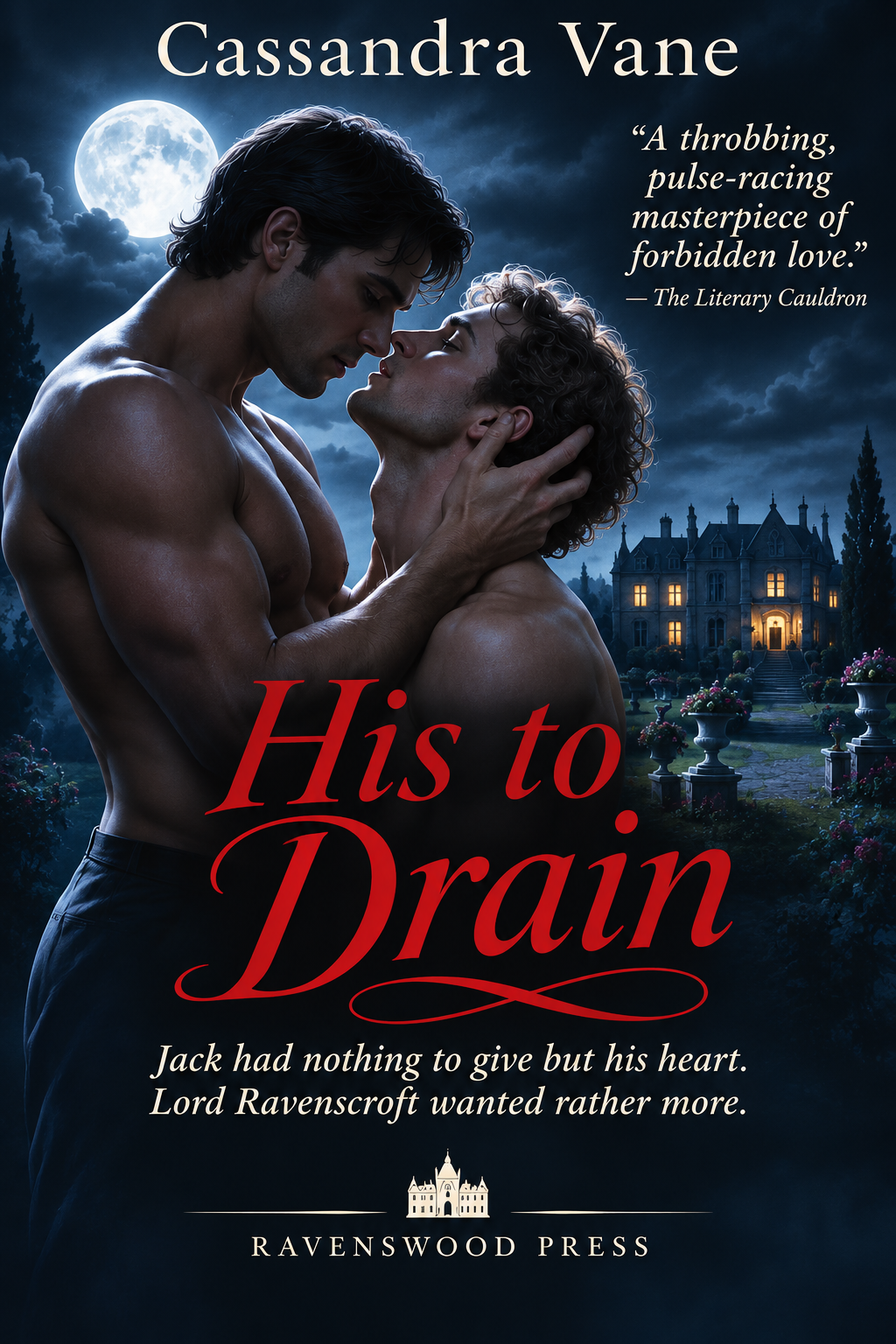
The grammaticality of the social actors, use of distance, angle and gaze, foregrounding and backgrounding, use of colour, composition and anchorage. You should also critically consider intertextuality, audience and political context.
His to Drain was first published in 1988 – the same year that the Conservative government banned the promotion of homosexuality by local authorities. How does this information impact on your analysis?
© Bede University. Unauthorised reproduction is prohibited. The Department reserves the right to amend assessment criteria retrospectively where pedagogically appropriate.