Department of Modern English Language and Linguistics
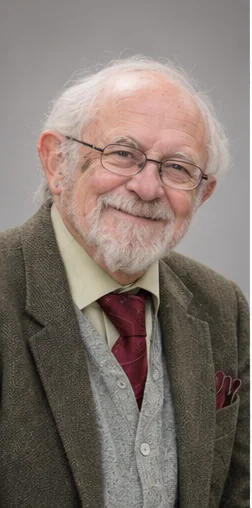
Professor Hugo Banning is internationally recognised as the founder of Marxist Analysis of Discourse (MAD), a pioneering theoretical framework. His publications have played a central role in establishing the intellectual foundations of the field, and he continues to engage with contemporary developments in critical discourse scholarship.
Teaching
MELL310: Marxist Analysis of Discourse
MELL311: Language and Media
MELL319: Language and Social Justice
Publications
- Banning, H. (1996) The Limits of Critique: On the Misapplication of Marxist Analysis of Discourse. A rejoinder to E. Winshawe. Journal of Critical Discourse and Social Transformation 12: 21-85.
- Banning, H. (1995) Beyond Methodological Nitpicking: Defending the Foundations of Marxist Analysis of Discourse. Language, Power and Praxis 15(3): 211-277.
- Banning, H. (1994) Whose Discourse? Whose Interests? A Rejoinder to Recent Criticisms of MAD. Journal of Marxist Language Studies 1(1): 32-51.
- Banning, H. (1993) The Ideology of Methodological Neutrality: A Response to E Winshawe and other critics of MAD. Journal of Critical Discourse and Social Transformation 9: 117-139.
- Banning, H. (1989) Marxist Analysis of Discourse: A Framework. Radical People’s Press: London.
- Banning, H. (1986) Cold Hearth, Broken Lines: A Marxist Analysis of Discourse of The Social Practice of Industrial Decommissioning in the North. Radical People’s Press: London.
The Ethnography of Protest
Hugo has a long history of combining reflexive autoethnographic research on protests with his hugely influential Marxist Analysis of Discourse framework. In order to act as a form of inspiration and start a dialogue, he has collaborated with Bede University's Publicity Department to look over some of the highlights of his long career.
The Miners’ Strike of 1984
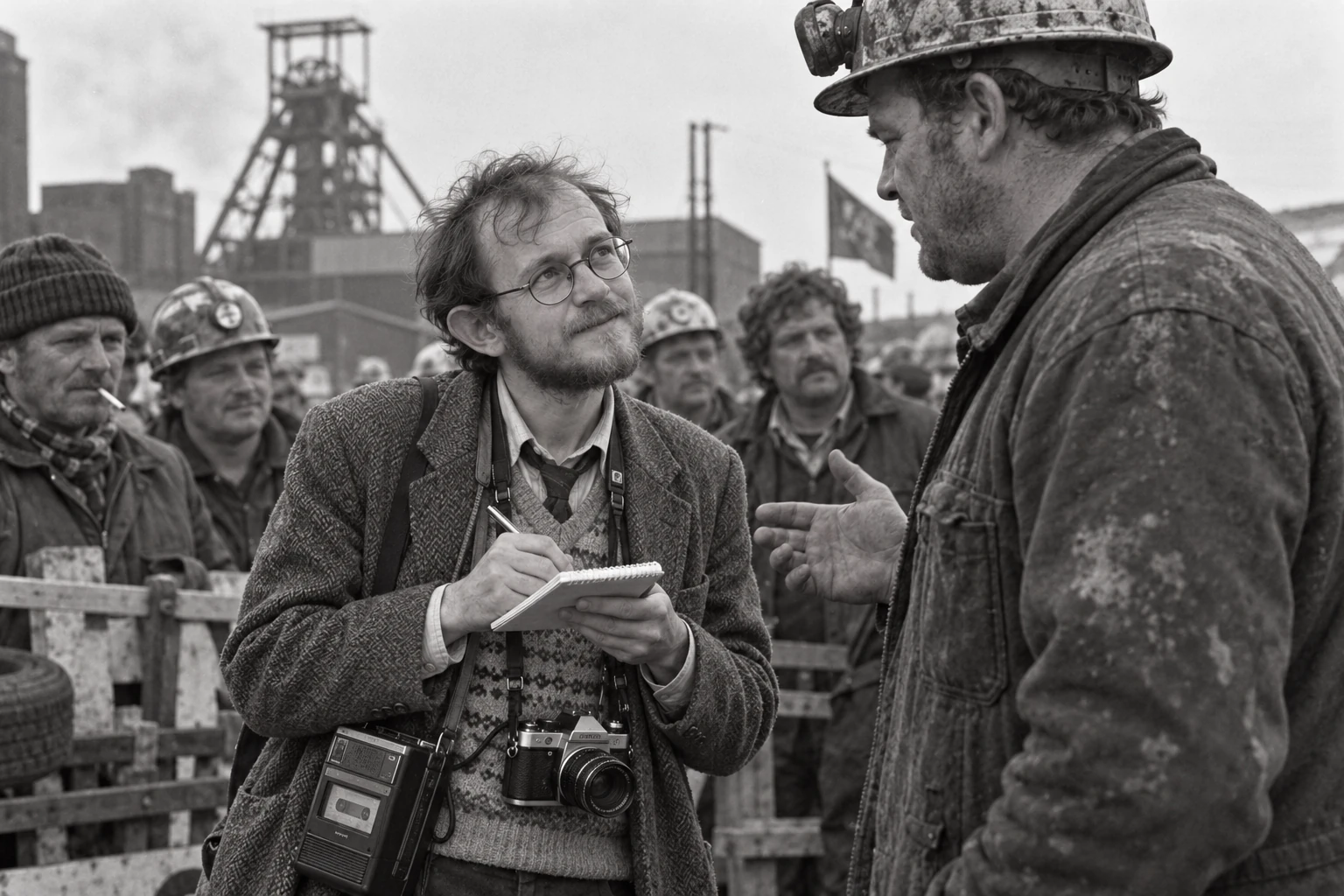
After a shaky start, Hugo won the trust of the miners and became "embedded" within the strike, carrying out a deep qualitative critical analysis of its social and dialectical practices. In this picture he is carrying out a narratology analysis of one of the strike leaders, Big Stan Marrow.
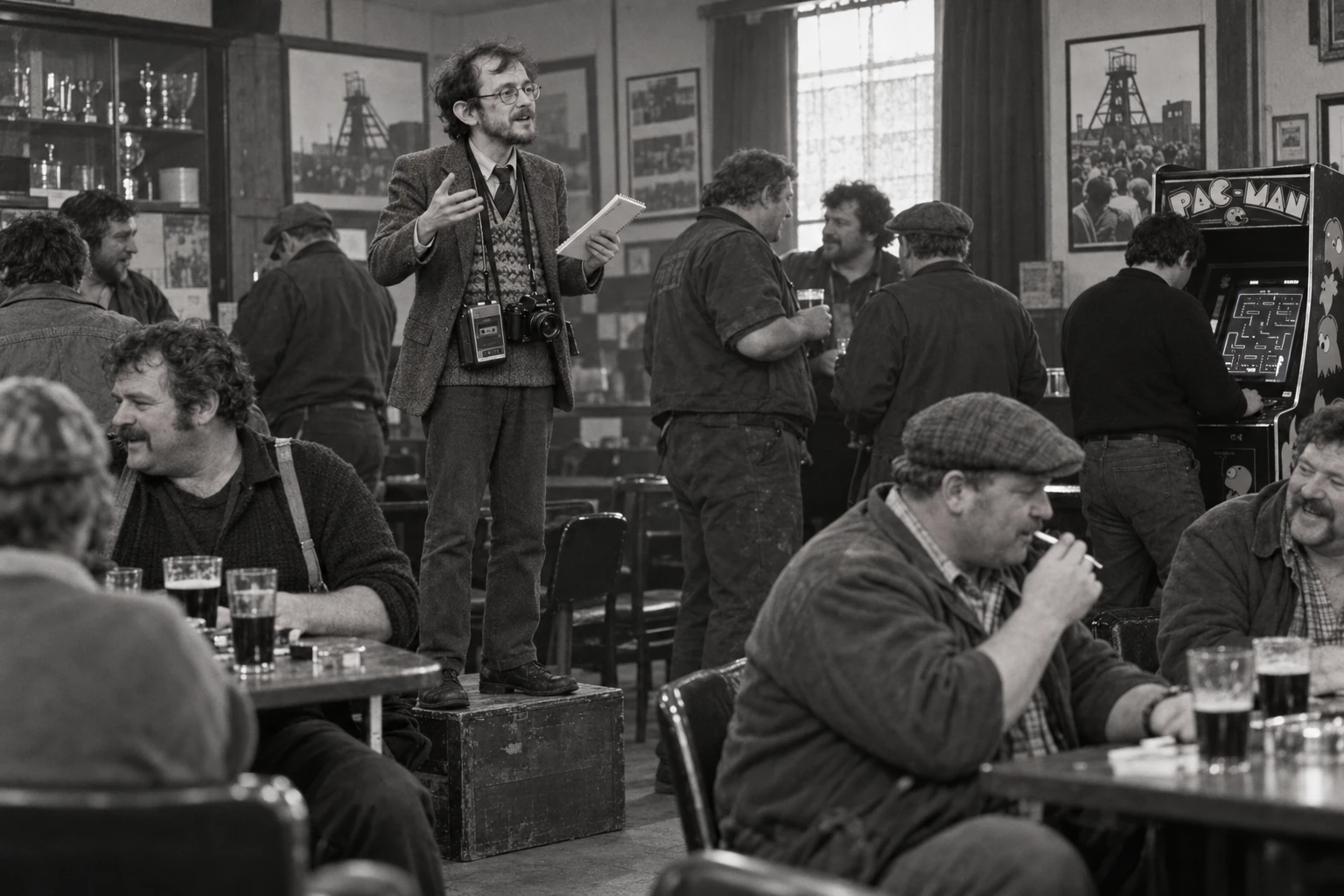
Hugo helped the miners to understand why they were striking, and during down-time, he provided lectures for them which introduced basic concepts like dialectical materialism, surplus value, false consciousness, commodity fetishism and the proletariat.
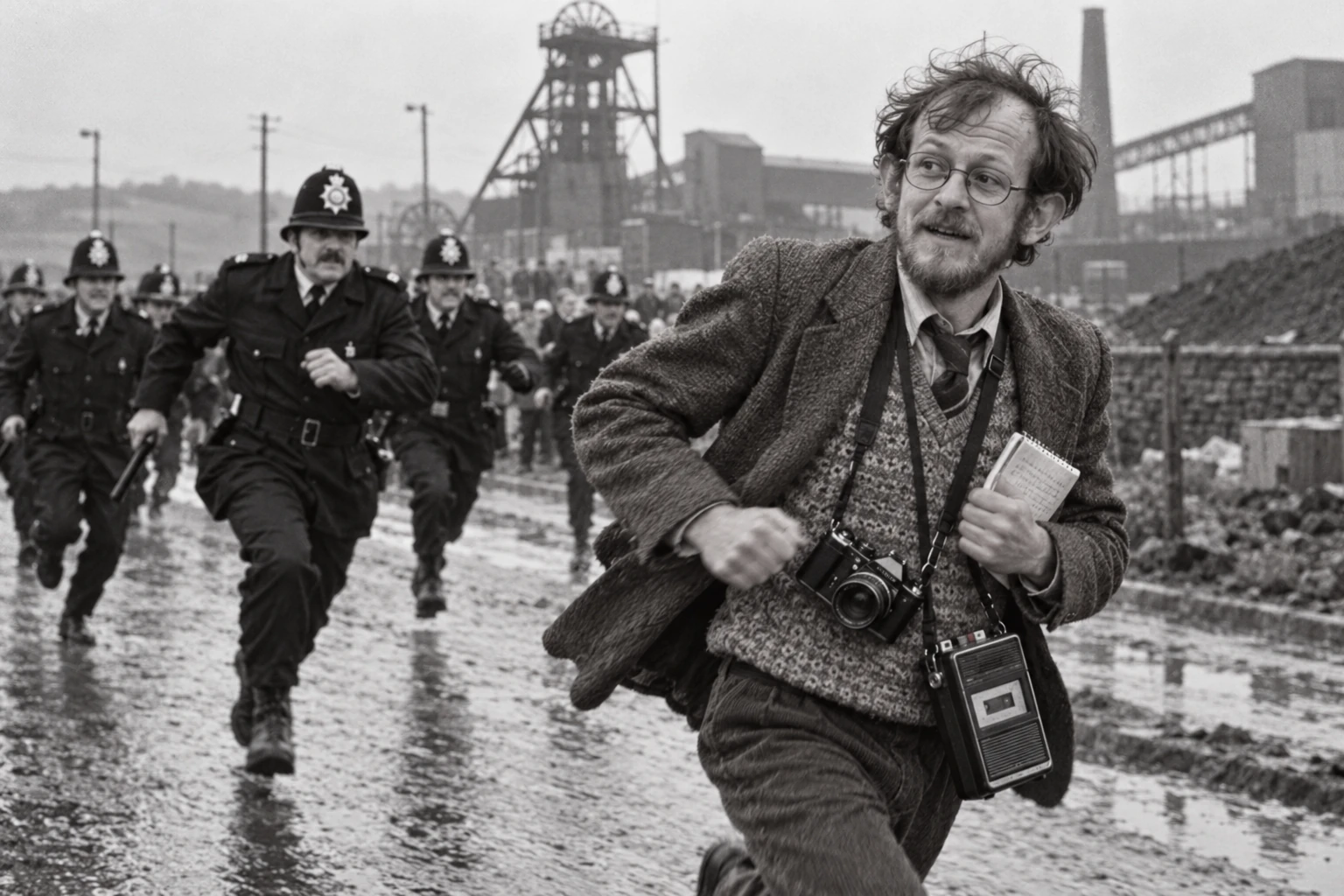
Unafraid to put himself in danger for the sake of academic knowledge, Hugo put himself on the front line of the strike at several points during his project. In this picture, he has just tried to educate a member of the police force about the ways that agentless passives can obscure responsibility - "The miners were attacked" has no agent. Hugo firmly believes that the strike could have been resolved peacefully, if people had just paid more attention to the importance of grammar.
The Iraq Peace Bus of 2003
During the US-led invasion of Iraq, Hugo joined a group of brave anti-war activists who departed London for Baghdad in a convoy of double decker buses. The activists aimed to offer themselves as human shields to deter the US-led coalition bombing of Iraq.
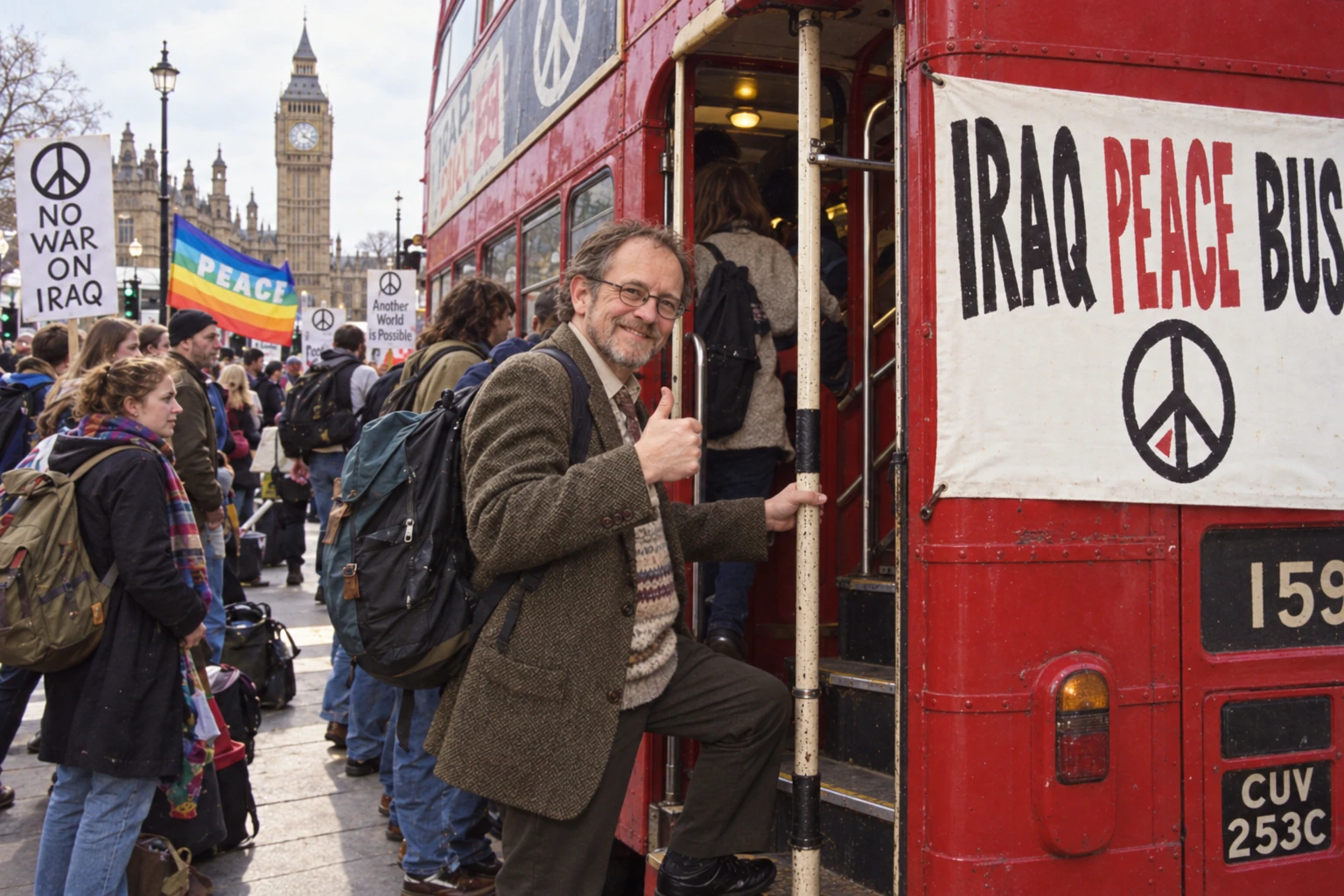
Although Hugo was in his 50s by this time, his sense of adventure and longstanding experience of peaceful protest made him one of the most popular and respected members of the Peace Bus Convoy. One of the other passengers even said he reminded her of Nye Bevan.
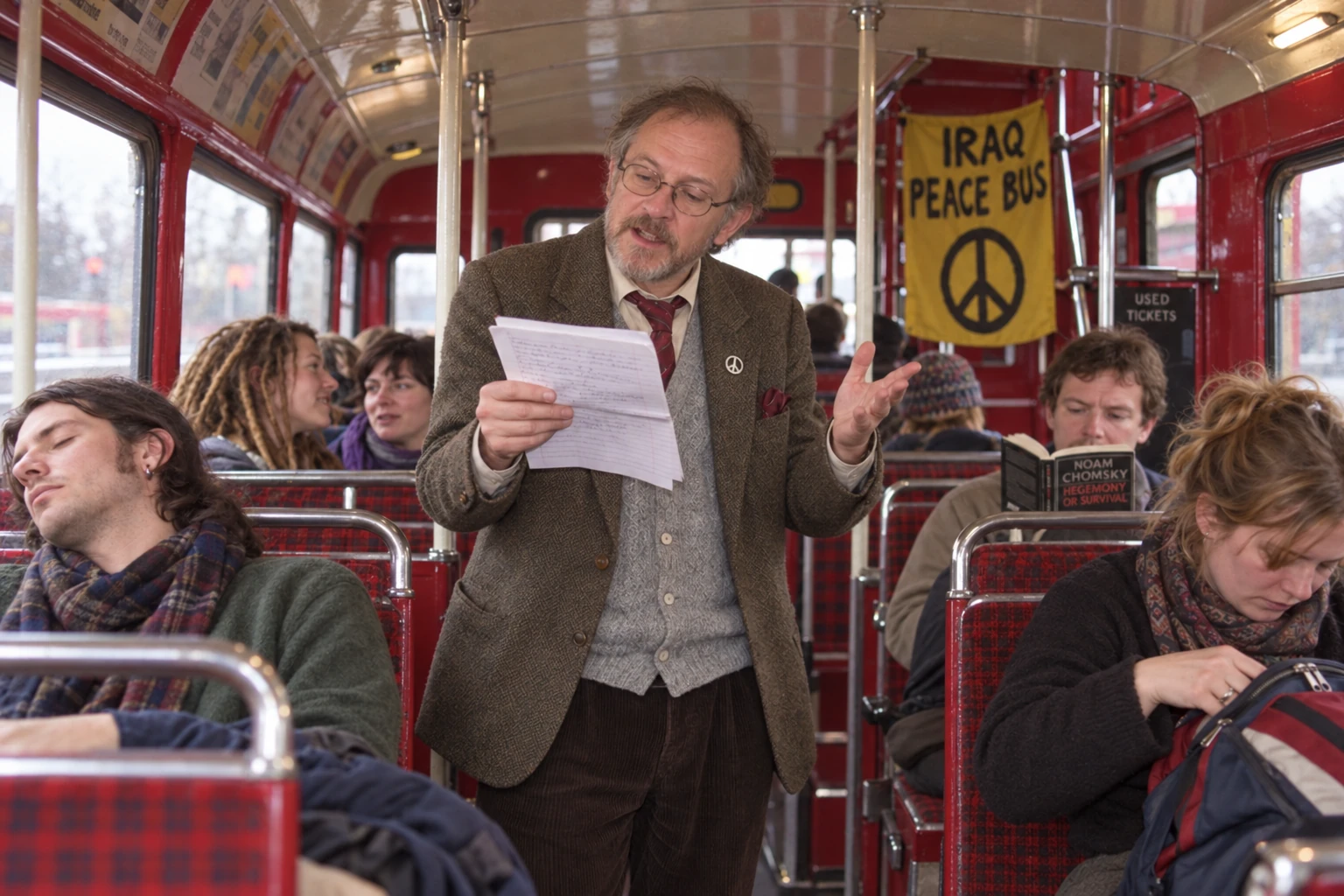
Hugo's inspirational poems kept morale high during the early part of the journey. In this picture he is reading one of his favourite poems - it is simply called Solidarity. Hugo remembers that he had great trouble finding a word to rhyme with solidarity, but eventually settled on vulgarity.

Unfortunately, due to a case of severe diarrhoea, Hugo's odyssey was forced to come to a premature end when the bus reached Paris. But he continued to support the bus in spirit from his hospital room, as it made its way onwards to the Middle East.